
The twin headwinds of rising oil prices, fuelled by West Asia’s ongoing conflict, and a below-normal monsoon forecast for 2026, are putting India’s consumption-driven growth story under pressure. While sectors hit by the conflict have raised prices to offset costlier raw materials and freight, a below-normal monsoon would squeeze farm incomes and hurt rural demand, together clouding companies’ FY27 growth outlook.In FY26, rural resilience, buoyed by a normal monsoon and a GST rate cut, lifted sales across FMCG, tractors, two-wheelers, white goods and construction materials such as cement. That tailwind is now waning. Tractor sales growth is forecast to slow to 0–2% in FY27, with volumes likely around 1.2 million units.A proposed deferral of TREM-V emission norms, however, could cushion the blow by delaying price increases. “Growth is expected to moderate this fiscal, representing a phase of normalization from the current high base,” said Anuj Sethi, senior director at Crisil Ratings. “Healthy reservoir levels and stable prices could support demand in the first half, though a potential El Niño may weigh on momentum in the second,” he added. While household spending on essentials is likely to hold, a weak monsoon would defer discretionary purchases from two-wheelers to white appliances.
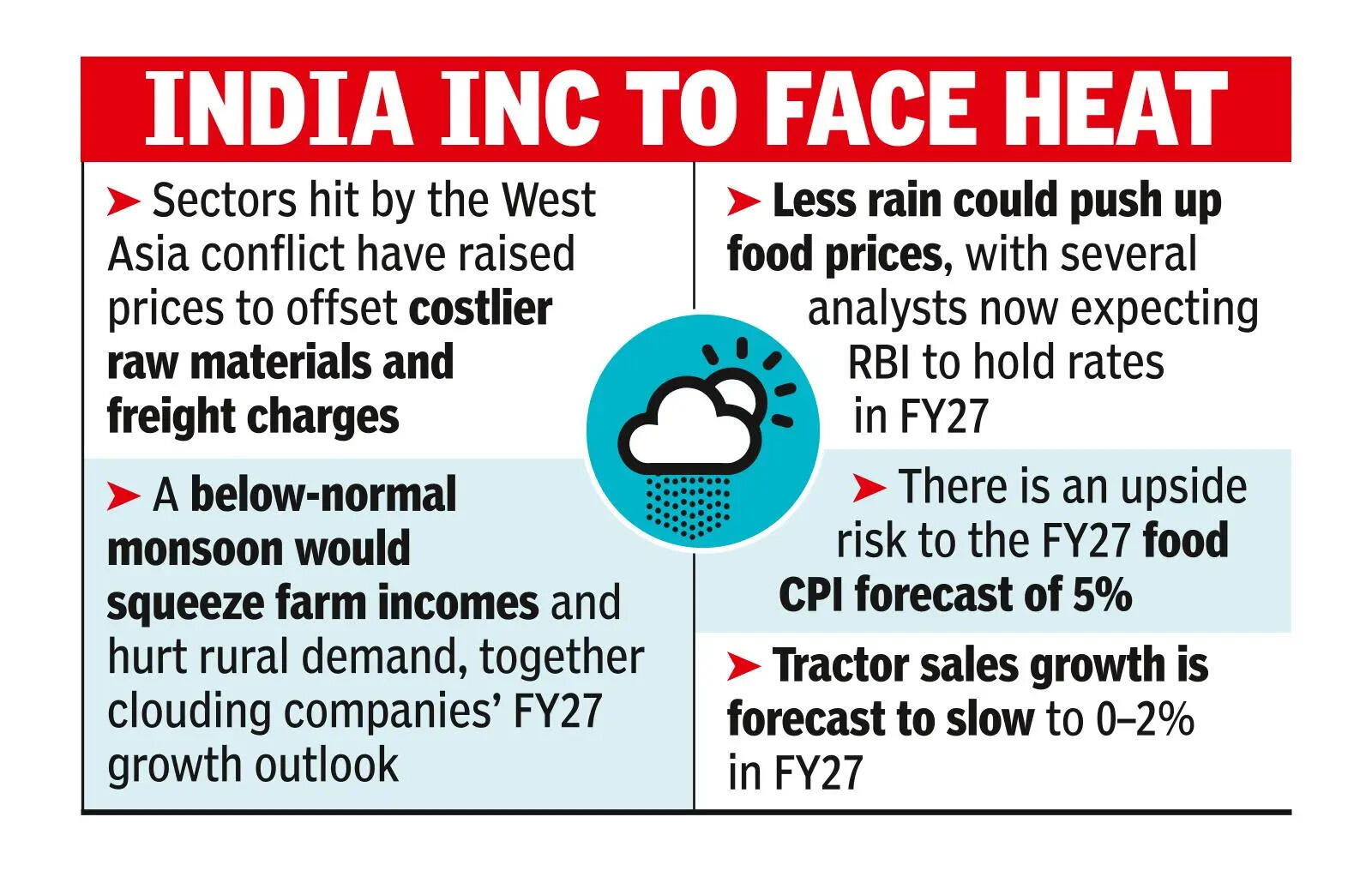
In FMCG, rural demand has been outpacing its urban counterpart, making the sector particularly exposed.“A weak monsoon is sentimentally negative for rural areas. Demand for essentials may not be impacted but discretionary spending will,” said Mayank Shah, chief marketing officer at Parle Products, adding that the pace of premiumisation in rural India will slow. Selective price hikes in ACs, beverages, and edible oils, triggered by war-led disruptions have already strained household budgets. The impact on rural discretionary spending, though, is expected to be gradual rather than structural, given the increasing diversification of rural income sources and improved access to financing, said NS Satish, CEO at Haier Appliances India.A weaker monsoon could push up food prices, with several analysts expecting the RBI to hold rates in FY27. “In our baseline scenario, CPI inflation is expected to average 4.9% in FY27, against 2.1% in FY26,” said Sakshi Gupta, principal economist at HDFC Bank, adding that risks to the inflation trajectory stem from elevated energy prices and their second-round effects, as well as from El Niño-related developments. “At the current juncture, we expect the RBI to remain on pause and maintain the repo rate at 5.25% in FY27.”Madhavi Arora, lead economist at Emkay Global, flagged an additional pressure point: with excise duty cuts on fuels effective since late March 2026, a retail fuel price hike remains possible once state elections conclude in April, particularly if crude stays elevated. A blended increase of Rs 10 per litre across petrol and diesel could push headline CPI up by 35–40 basis points, with a further 15–20 basis points through second-order effects. A below-normal monsoon, she said, adds further upside risk to the FY27 food CPI forecast of 5%.“If these external headwinds persist, they could have a significant impact on the economy, both urban and rural, creating a cascading effect across industries,” said Manish Anandani, MD at Kenvue India, which makes brands such as Listerine.(With inputs from Asmita Dey, G Balachandar, Mayur Shetty & Partha Sinha)
About the Author

Discover more from InfoVera Online
Subscribe to get the latest posts sent to your email.


