
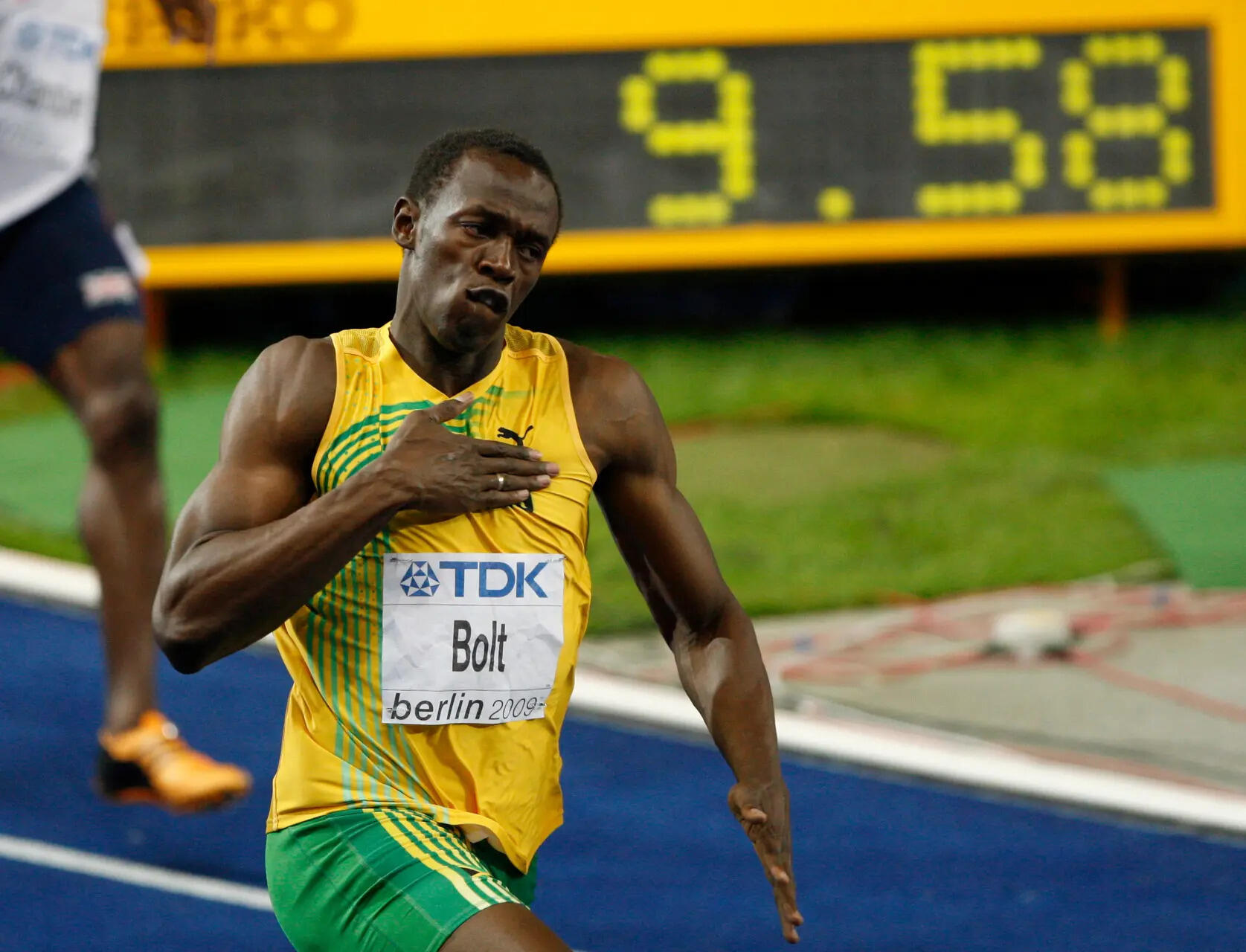
When Usain Bolt crouched into the starting blocks at the 2009 World Championships in Berlin, scientists and biomechanics experts had already spent years explaining, with reasonable conviction, why a man of his dimensions could not be the fastest sprinter on earth. At six feet five inches tall, Bolt was built nothing like the athletes the sport had historically produced at the top of the 100 metres, where explosive starts and rapid stride turnover had always favoured shorter, more compact physiques. The theory was straightforward and the evidence behind it was credible: longer legs take more time to cycle through their full range of motion, which means taller sprinters are slower out of the blocks and slower in the opening phase of the race, and at the highest level of the sport those fractions of a second are the difference between winning and finishing behind people who are better suited to the event. Bolt ran 9.58 seconds that evening in Berlin, the fastest any human being has ever covered 100 metres, and he set the 200 metre world record of 19.19 seconds at the same championships. Both records still stand. The scientists were not wrong about the theory. Bolt simply determined that the theory did not apply to him, and then spent years proving it.
Where he came from and what he carried
Bolt was born in 1986 in Sherwood Content, a small town in the parish of Trelawny in Jamaica, and showed enough natural ability as a teenager to arrive at the 2004 Athens Olympics at seventeen years old as one of the most discussed young sprinters in the world. He was eliminated in the first round of the 200 metres heats, competing while carrying a hamstring injury, and the gap between the expectation that had surrounded his arrival and the result he delivered was difficult to ignore. What most people watching did not know was that Bolt had been managing scoliosis since childhood, a curvature of the spine that left his right leg approximately half an inch shorter than his left, creating a structural imbalance that affected his stride and placed disproportionate strain on his hamstrings and lower back throughout his career. Biomechanical studies showed that he struck the ground with roughly fourteen percent more force on one side to compensate for the imbalance, which made him significantly more vulnerable to the soft tissue injuries that interrupted his training repeatedly in his earlier years.
Managing it required constant core strengthening, regular chiropractic treatment, and the kind of daily maintenance that has no place in any highlight reel. His coach Glen Mills, who took over his development in the years after Athens, had to rebuild his mechanics and his approach to training almost entirely, and the process was slow and unglamorous in the way that most genuine development tends to be.What Mills worked with, and eventually worked around, was the same physical reality that the experts had identified as a liability. Bolt’s extraordinary height meant that the opening phase of any sprint, where shorter and more compact athletes generate explosive acceleration out of the blocks, was always going to be his weakest territory, and in the early years of his senior career it showed. The solution was not to fight the frame but to develop everything around it, building the core strength and the technical precision that would allow his stride length to take over once the race entered its middle and later stages, where each of his strides covered ground that a smaller athlete would need two or three strides to match. Getting to that phase of the race in a competitive position required the start to improve to a level that his natural frame made genuinely difficult to achieve, and that improvement did not arrive quickly or without cost, but when it did arrive, the combination of a serviceable start and a devastating second half of the race produced something that the biomechanics models had not accounted for.
The setbacks that shaped the philosophy
Bolt arrived at the 2008 Beijing Olympics as the favourite for the 100 metres and won in 9.69 seconds, easing up before the line and still breaking the world record, and followed it with gold in the 200 metres and the 4×100 metres relay. The world had its answer about whether his height was a disadvantage. But the career that surrounded those performances included moments that the celebrations tended to obscure. At the 2011 World Championships in Daegu, Bolt false-started in the 100 metres final and was disqualified, losing his title in the most public and unrecoverable way a sprinter can lose it. Days later he returned to the same track and won the 200 metres gold medal. In the lead-up to the 2012 London Olympics, he lost to his training partner Yohan Blake at the Jamaican Olympic trials while dealing with severe back spasms, and the commentary that followed suggested his dominance had run its course.
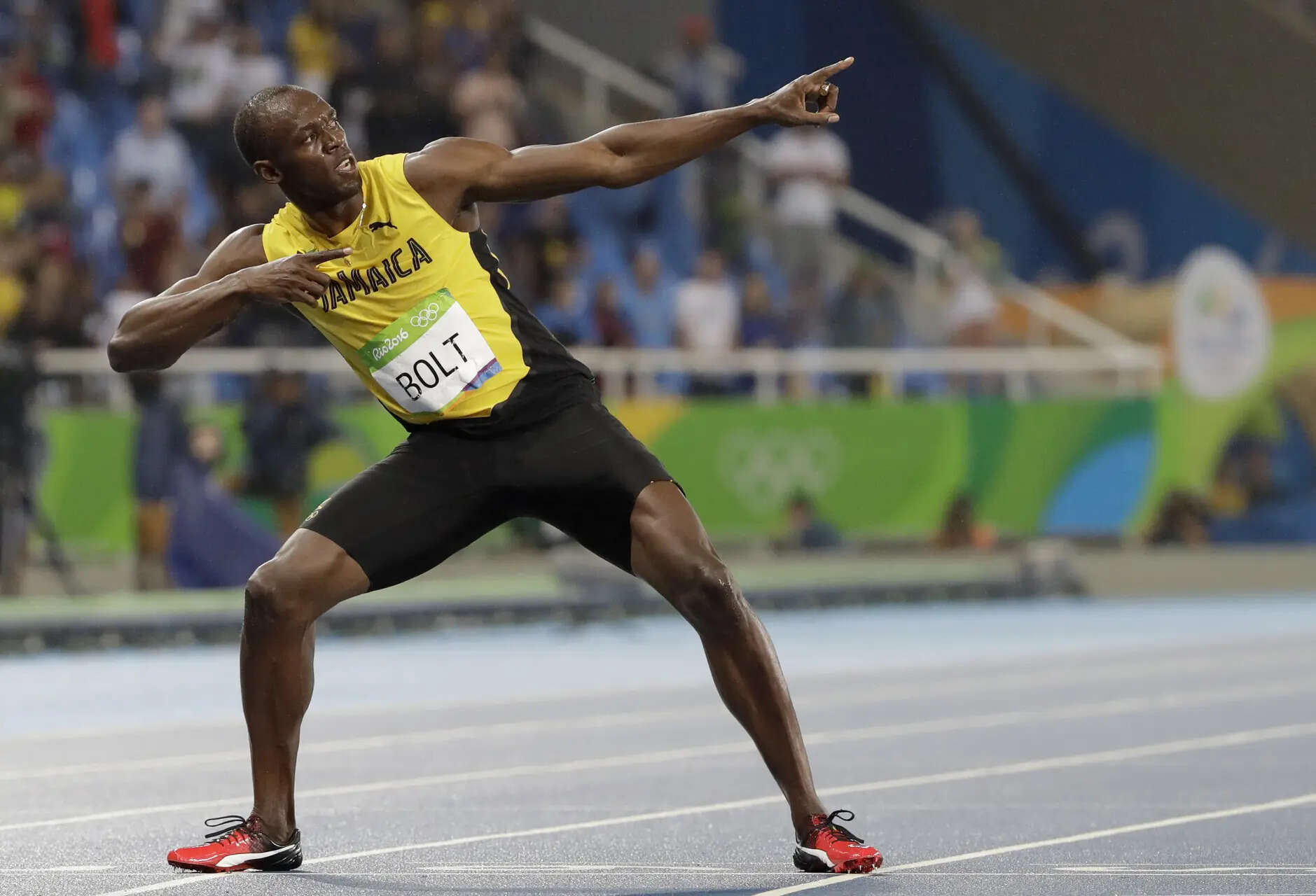
FILE – Usain Bolt from Jamaica celebrates winning the gold medal in the men’s 200-meter final during the athletics competitions of the 2016 Summer Olympics at the Olympic stadium in Rio de Janeiro, Brazil, Thursday, Aug. 18, 2016. (AP Photo/David J. Phillip, File)
He travelled to Germany for intensive medical treatment, returned to training, and ran 9.63 seconds in the Olympic final, an Olympic record, delivered at precisely the moment when the doubt about him was loudest. In 2017, in his final appearance at a major championship, a hamstring tear during the 4×100 metres relay forced him to pull up mid-race and leave the track without finishing, ending a career that had begun with injury in Athens and closed the same way thirteen years later.
What the quote means and how it works in practice
The difference between the impossible and the possible lies in a person’s determination. Bolt once said in an interview that he trained four years to run for 9.58 seconds, and that ratio between the investment and the visible output is the most honest description available of what determination actually looks like before it becomes a world record. The impossible, in his specific case, was a man built the wrong way for his event, managing a spinal condition that made him injury-prone, setting records that scientists had said the human body could not produce. The possible was what happened when the work done across those four years, and the years before them, made the body capable of it anyway.
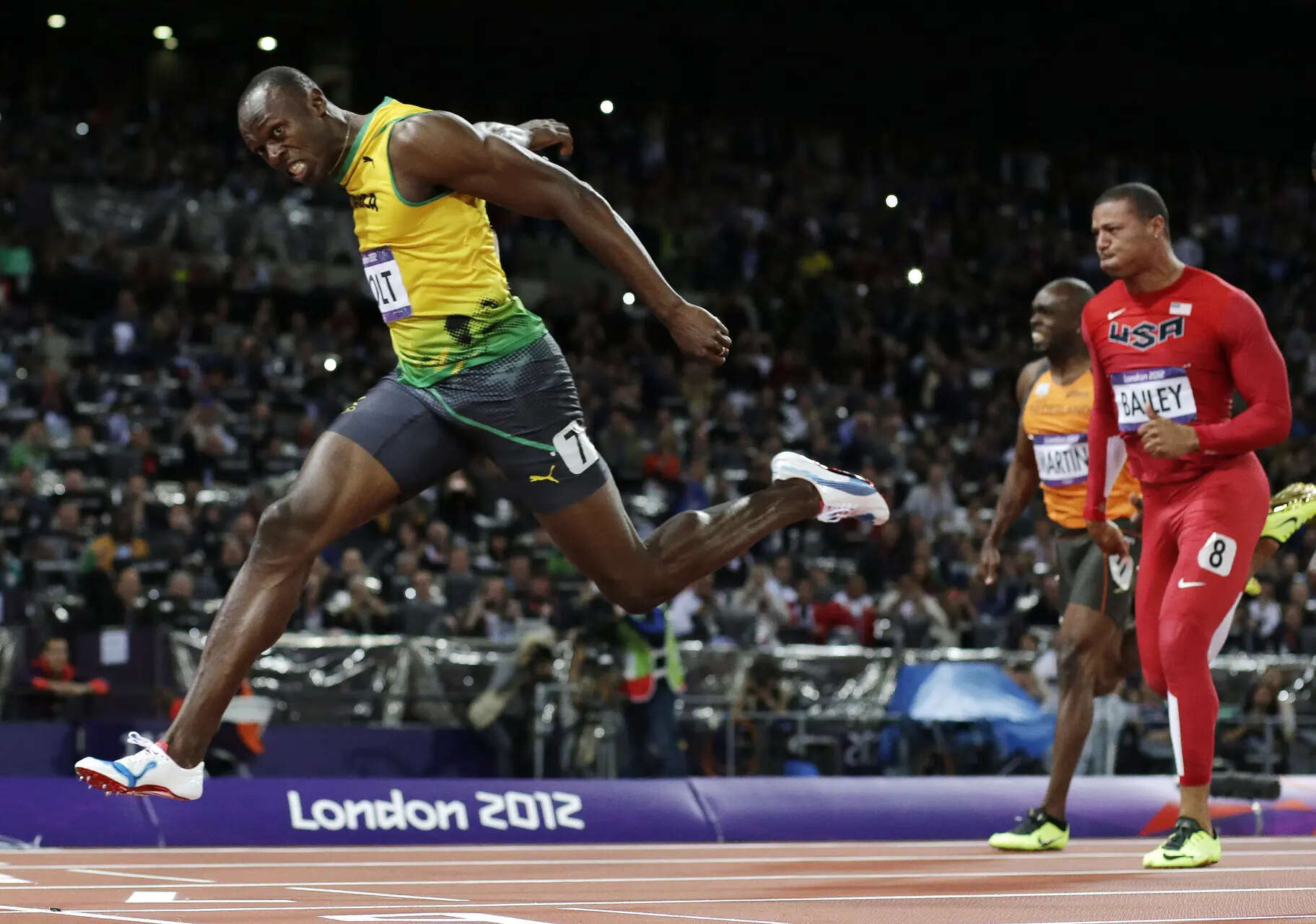
FILE – Jamaica’s Usain Bolt crosses the finish line to win gold in the men’s 100-meter final during the athletics in the Olympic Stadium at the 2012 Summer Olympics, London, Sunday, Aug. 5, 2012. (AP Photo/David J. Phillip, File)
The student who has been preparing for an examination for months without feeling ready, the professional working toward a goal that keeps feeling out of reach, the person who has been told repeatedly that their particular combination of qualities does not fit the standard profile for what they are trying to achieve, is living inside the part of Bolt’s career that the cameras were not pointed at. The nine seconds in Berlin was the result. The scoliosis management, the rebuild under Glen Mills, the loss to Yohan Blake, the trip to Germany with back spasms, and the return to win an Olympic record in London were the determination. One produced the other, and the sequence between them is the only thing the quote is describing.
About the Author

Discover more from InfoVera Online
Subscribe to get the latest posts sent to your email.


